Slash and Burn Lawn

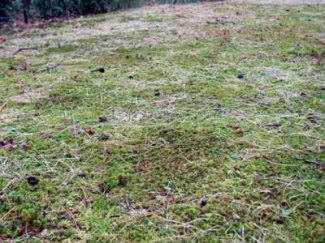
The lawn is a big priority in suburbia.  It has never been a big deal for me.  One year we played tackle football on my mother’s front yard and destroyed the grass.  It did not grow back so I grew up looking at dirt patches and crab grass.  This must have permanently seared my sense of aesthetics.  Over time, the space around my mother’s house turned into a moss-lawn.  I am not sure what the neighbors think, but I see it as a wonder of the natural world.  The post I made about it in my last blog in 2011 was entitled, “ The Moss Lawn, a Suburban Solution to Global Warming.” I am still waiting for a major environmental prize for my contribution to stop climate change.  Maybe I will reprint it next month to grease the skids.

moss lawn IMG_1049 r 5-11
The Unique Moss Lawn in Southern NH

Where we worked in Central Africa, people dug up every bit of grass around their houses so that snakes had no place to hide. I don’t think that this is an option for our house in North East TN. The lawn is a fine blend of grass and weeds.  Crab grass would be ok, but it grows too fast.  I want to go at least 2 weeks between mowings.  In the Central African Republic there was a type of Bermuda Grass that never grew tall so it did not need cutting.  I don’t think that it would grow here.

Slash and burn 1.jpg
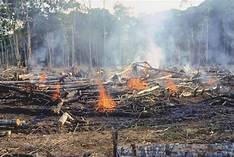
Slash and Burn Agriculture

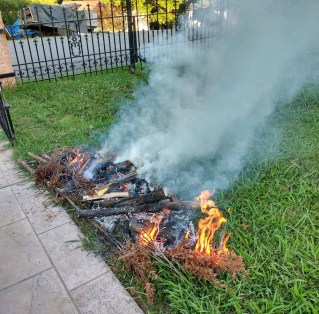
I was inspired by the slash and burn type of agriculture practiced in Central Africa.  This practice has a bad reputation from environmentalists, but at the subsistence level it is essential for families making a living from agriculture.  Here in TN we burned a brush-pile that got so hot it burned the grass and the grass roots.  After the fire, the soil was ready for grass seed without any other preparation.  The fire also burned the weed seeds so only what we planted grew.  I am saving any brush we have around for burning weed and crab-grass infested spots in our lawn next spring.  We are fortunate enough to live in an area that does not have any pesky rules about brush fires in the front lawn.

Slash & Burn Lawn ecr
Slash and Burn Lawn


Congo Museum

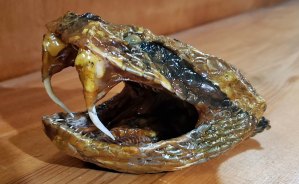
I opened some trunks and met some old friends last month.  The mounted Gabon Viper head (the snake with the longest fangs in the world) seemed much smaller than I remember after packing it away 25 years ago.  Then I discovered that I had two of them.   The larger one is larger than I remembered.  The mounted Cobra head made me recall what it was like to pry open the fangs when I mounted it. I got out a skull that I could not identify. I thought about it a while and first thought it was a Lungfish skull, but then realized it was a Soft-shelled turtle skull.

Gabon Viper 7-20 ec.jpg

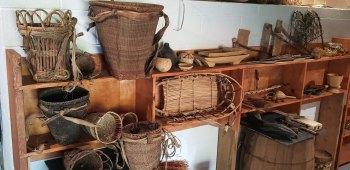
All this was part of getting our Congo Museum open in our basement. Poojah has mounted some African fabric on the ceiling to hide the sewer pipe. She is working on the display of the Aka Pygmy skirts made of forest materials. The 6 different basket types are cool.  Spears, axes and traditional instruments make up a large part of the collection.

We want this to be a hands-on experience.  The “Identify the forest animal by looking at its skull” activity is a real challenge. There might be a simulated spear the antelope experience. To keep the neighbor’s cat away from the blue birds in our yard we might offer a communal net hunt experience. This nonlethal technique will teach the cat to hunt elsewhere.

Baskets er 7-20

I am still working on mounting our Python skin.  Our fresh-water Puffer fish was mounted by a guy in Congo who skinned it and put sand inside to give it shape before drying it in the sun.  We have some impressive Tiger fish heads.  Our insect collection has unusual specimens.  The Goliath beetles are the size of your fist. The Tailless whip scorpion is a perennial contender for the coveted, “World’s most gruesome arachnid” award. We have two. Poojah collected both of them with a big can of Rambo (Our local version of Raid).  The museum is open by appointment so let us know when you want to visit.

Chainsaws

Last year I bought a chain saw without a background check at Big John’s Closeouts.  In Dave Barry’s book on home improvements he says that there are some people that just should not own a chainsaw and that it should be illegal to sell one to a left-handed person.  I am right-handed, but close to the “should not own a chainsaw” cutoff.

That deficiency got us kicked out of Alaska.  To live there you need to meet at least 2 qualifications.  1.  Be able to build a cabin on a plot of forest land 5 miles from any road without purchasing any wood products.  2. Be able to rebuild your car engine by the side of the road with a Leatherman tool.  Bill Schofield, a true Alaskans, met these qualifications.  For the two years he and Hazel were with us in Congo, I was stress free when we drove or boated around in the Congo Basin Rain Forest.

OLYMPUS DIGITAL CAMERA

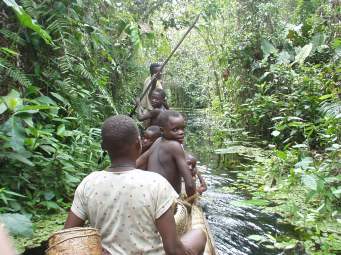
My Aunt Gail gave me my first chain saw to take to the Congo.  We carried it in our dugout canoe for a while.  Once when we came to where a log blocked our way, Bill cut it to clear the path.  Unfortunately, the canoe rocked when the log broke off and the chain saw went to the bottom of the river.  I was pretty brave back then, so I dove down and rescued it.

OLYMPUS DIGITAL CAMERA

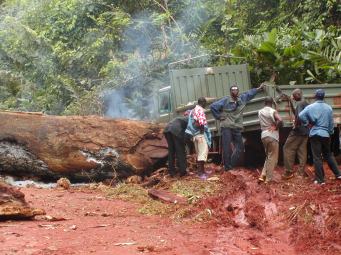
I got out of the habit of carrying it on river trips and only carried it in the truck.  With fear and trembling, I once used it once to clear a tree of 2 feet in diameter from the road.  It was not enough saw, however, when one of the forest giants came down across the roads.  In those circumstances you either made a detour through the forest around the fallen tree or waited for an employee of the logging company to clear the road.

Chainsaw 1 c 8-19

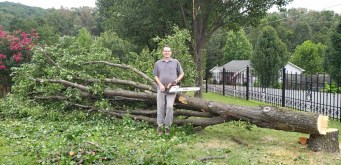
My recent chainsaw purchase was for less rigorous tasks.  We had 3 Bradford pear trees in our front yard.  At one time they were the darling of landscapers with their beautiful white flowers in the spring.  People now see the downside of this species and put them on the “undesirable tree” list.  Ours are trying to grow a Bradford pear forest in the yard by sending up a myriad of new trees from the tangle of roots that come above the ground in several places.  In the Feb post called “High Altitude Pruning” I wrote about our rule in regard to tree height in our yard.  One of our Bradford Pear trees was getting to the point where if the wind knocked it over, it would hit the house.

Tree butt ec 5-20

I knew that it had to come down, but I have seen all of those videos on YouTube where people cut down trees that end up falling on their house.  On the big day I invited some local advisers over.  Tom K volunteered to cut down the tree and the whole operation went without a hitch.   I mentioned the bottom four feet of the tree in the “Lawn Ornament 9-19” post.  The frog and shell are temporary until we get a pelican lawn ornament to put on it.

Cave in at the Moale Outhouse

A warning to the sensitive.  This blog post deals with the real issues of life in the Congo Basin rain forest, but the subject matter might be considered very crude.    Read it at your own risk.

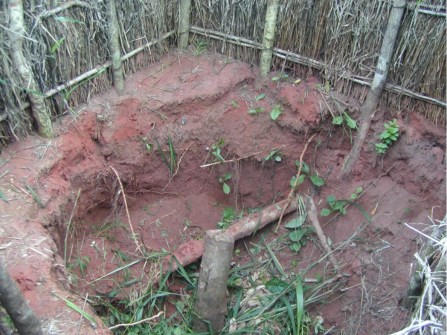
Right off the bat I will put your mind at ease.  As far as I know, no one was using the facility at the time of the cave in.  Imagine my shock when I arrived at Moale after a 2 month absence.  When I peered inside the grass walled enclosure around the latrine, my heart dropped as I saw an eight foot in diameter and 6 foot deep crater.  This presented a major inconvenience for my stay in Moale.Moale Outhouse 1.jpg
Latrines are an important tool to prevent disease in the developing world.  Where people need convincing, we like to show the divine mandate for latrines found in Deuteronomy 23:12-14.  Following the hygiene protocol from these verses prevents diseases ranging such as round worm, hook worm, whip worm, tape worm, blood flukes, amoebas and cholera.  To define terms I will call the hole a latrine and the enclosure around the hole an outhouse, although the South Africa term “long drop” is more descriptive.

In the remote forest areas of Congo and CAR where I spend a lot of time, the people may or may not have a latrine.  In the inundated forest areas of Congo you can hit water a few inches down in the soil.  The water people who live in these areas paddle their dugout canoes out from their village to do their business.  Little dugout canoes are so tippy that you risk going over at a moment when you are exposed and vulnerable, but a large dugout canoe makes a very stable platform for your daily effort.  If more than one uses the facilities at any one time the protocol for staggering the load is starboard, port, starboard.  The abundant water is great for the toilet paperless masses, but if enough people followed this practice it would pollute the water and create a risk for cholera.

When you are in a large village surrounded by water with no outhouses and have to go, the risk of spreading cholera seems a lot less important than the risk of massive pressure buildup so you do what is called a “water poop”. When you are up to your neck in the river, no one can see what you are doing.  In a way you become part of the natural order as you see the fish feeding on your waste.  When you are in the water they can get a little too personal when they nip at your butt.  Some species of African fish live on Hippo feces.  In areas where hippos are wiped out, this hygiene practice might be pulling these species of fish back from the brink of extinction.

Another issue in this part of the world is that sandy soil makes digging a deep narrow hole difficult.  We all weigh risk against rewards.  A log cribbing can be used to shore up a hole.  The considerable work involved is easily understood, but the health benefits achieved are harder to quantify.  The alternative to the latrine is a condition where you have to be careful where you walk in the forest around the village.  Children can create this condition even if there is a latrine.  They are a major factor in any latrine project.

When we first came to the Republic of Congo I learned about local outhouse architecture.  I needed one built, so I hired a guy to do the building with planks hacked from an old dugout canoe.  I expected the tall narrow outline you see at remote national parks and picnic areas.  When the job was done I was surprised to see a rather short wide roofless structure.  I suppose that this helps people know if the outhouse is occupied as well as improving ventilation.  The large enclosure is also necessary because within the enclosure there will be a place to take a bucket shower.  It sounds a little disgusting, but in terms of lack of toilet paper, economy of space and building materials it makes sense.

A big issue with latrines is making the platform to cover the hole.  In remote forest areas you use logs hopefully the kind that do not rot quickly.  The small hole in the center can be a slit between two logs or any kind of scrap metal available.  For my first latrine we put the housing of an old push lawn mower on top to the log platform.  The opening where the motor was removed made a beautiful hole.  An old basin with a rusted out bottom is often used.    The custom where I work seems to be to make the hold as small as possible.  Aiming from the squatting position into a tiny hole is a skill you develop.

At Mbaiki I know of a latrine/outhouse built right where a 4 acre gently sloping property drains.  Of course the 20 foot deep latrine hole fills up to the top when it rains.  In Hawaii, a “blow hole” is a hole formed in a mass of lava that flowed into the ocean and solidified.  When waves wash against the lava mass, water is forced through the hole and sprays into the air like a geyser.  There is a small hole in the concrete latrine platform at Mbaiki.  A heavy rain fills and creates considerable water pressure in the latrine hole forcing the effluent to spray into the air and make a loud gurgling sound.  A latrine blow hole isn’t as majestic as a lava blow hole, but I was impressed when I saw it.

Back in 08 and 09, Diane & I traveled to Moale every month to do training and medical work.  The latrine had reached a condition you could call high tide lapping at your feet.  It is probably not a good idea to look into the hole, but if you did you would see a writhing mass of life forms.  My father would have said, “That would gag a maggot”, but that is exactly what made up the writhing mass.  Diane reminded me each trip that we had to do something about the latrine.

When Tim H. came with us to build a Training Center store room and work area, it was a little tricky placing the building.  The sandy soil kept latrines shallow so the ideal spot for the building was dotted by old filled in latrines.  A failed hand-dug well project in the area left a few 4 foot tall by 3 feet diameter sections of concrete well liners.  Someone had used one for a latrine liner so that the hole could be dug deeper in the sandy soil.   It had been filled in for a year, but our efforts exposed the top of the concrete well liner.

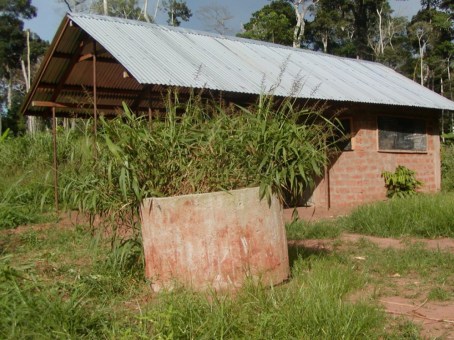
Tim and I knew that we needed it for our next latrine.  We were sure that the nasty micro organisms were no longer viable so we instructed our crew to start digging out the concrete well liners.  They got about three quarters of the way down, encountered something nasty and went on strike.  Ever resourceful, Tim figured out how to hook a chain to it and we pulled it out of the ground with the Toyota Hilux.  After that we stood it as a forest version of an obelisk.  We figured that after a month the rain would sanitize it.  It looks nice standing in between the Training Center building and the guest house, a trophy rescued from an old latrine.
Moale Outhouse 2.jpg

Tim sent a Sudanese carpenter named Patrick down alone to finish the Training Center building.  When he came back he reported that he had finished all his work early so he got a crew together and made us a new latrine and out house as well as filling in the old hole with the high tide.  You can imagine the excitement when Tim, Hap & I went back to Moale the next time.  We noticed right away that our well liner obelisk was still in place, so it had not been used for the new latrine.  The new outhouse was about 10 feet square made of wood poles, vines and grass.  The side corridor entry way made it very private.  The platform looked solid, the hold was deeper than normal (this should have got us thinking) and the shower area was first rate.  We were all well pleased with the work of Patrice and his crews.  When Diane came a month later she gave her stamp of approval.

On my next visit I witnessed the devastation.  After the fact we know that the hole was just too deep and wide for the unstable sandy soil.  I stood there staring into the crater wondering what to do.  Diane & I had left Tim’s hand crafted shower stand in the enclosure on our last trip.  It was now buried under tons of soil and who knows what else.  I decided that he would forgive me for leaving it where it was.  Instead of ample space to get to the hole and the shower area, I was now looking at a 2 foot by 6 foot side corridor entry way and then the crater.  Several potential solutions came to mind, but I like to study problems for a while before getting into the fix it mode.  Eventually I put a rice sack over the end of the entry way for privacy and determined that 2 feet by six was enough space for a shower and a squat spot.  Besides, with a hole eight feet across you could never miss.
A Trip To Nepal 2

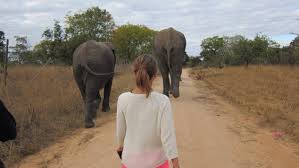
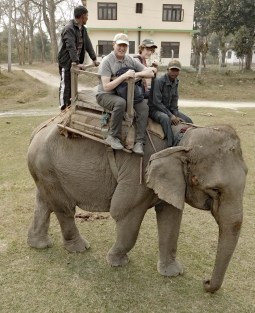
During our time in the Chitawan National Park in Nepal, we rode an elephant in the jungle looking for wildlife.  You soon get used to the rhythmic lurch forward with each step.  It is a great way to travel through the forest.  Riding elephants is less culturally accepted now days (Western culture that is). One lodge in the park uses a PC alternative that keeps the elephants employed. Instead of riding on the elephant, the tourists walk along forest paths between two elephants.  This will work fine until the tigers learn to attack suddenly from the side. My advice is to stay in the middle of the group.

walking with elephant.jpg

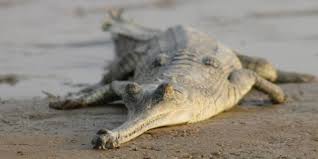
In the jungle we heard the iconic cry of the peacock in its natural habitat.  We were ready to see a tiger behind every bush.  Once while watching a sambar deer, a langur monkey announced that a tiger was near.  It fled and we did not see the tiger.  We saw many jungle fowl, the ancestor of the domestic chicken. They look a lot like the bantam roosters we raise when I was growing up. Do you know an eight year old that can tell you every species of crocodile? Tell him or her that I fulfilled a lifelong dream and saw a gharial.

gharial crocodile.jpg

Where we stayed the local community would not allow me to walk the river bank and fish even though they do the same thing as well as gather firewood in the forest. They said that they are willing to take the risk, but I was not allowed to.  The men who drive tourists around are not afraid of tigers. It is the elephants that cause trouble. An old tusker named Durvbey is notorious for hitting vehicles.

Over 3 days we saw: 9 Asian rhinos, wild boar, chital deer, Hog deer, barking deer, sambar deer, 1 python, 1 mongoose, jungle fowl, peafowl, rhesus monkeys, langar monkeys, 2 gharial crocodiles

A Trip to Nepal 1

On our first day in the jungle, we made a jeep safari.  The other passengers  were 10 noisy university students from Kathmandou.  It worked out fine.  They told us that last rainy season during a period of high water, some of the park’s rhinos washed down the Narayani River to India, but that India was going to give the rhino’s back to Nepal.

DSCN1739 er

On the second afternoon we rode on an elephant through the jungle. The mahoot (elephant driver) is lifted to his position on the elephant’s neck by the elephant. For us dudes he backs it up so its rear end is under the loading platform and we step into the howdah (the place you sit). When the howdah took a starboard list I was glad that no one made any wise cracks about me being over-weight (at least not in English). When Poojah & I switched places it returned to even keel. I am sure that the mahoot just failed to adequately tighten the girth strap.

DSCN1813 ecr

We stayed in a “home-stay”  ( like B & B). Our host family built a couple of stucco faced mud & bamboo huts for guests. We were in with the family for 3 days. They served us 3 meals a day that were different than anything I ever had before. Black mustard seed is used in most dishes.  We walked with our host family to the community center for the traditional dances, so it did not feel like just something they did for the tourists.

Group Picture, Pooja & Friend

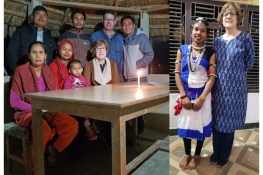
The atmosphere was charming.  The little boy said, “Happy birthday” every time he saw the candle illuminating our evening meal.    In this area mattresses and pillows tend to be hard, but our home-stay mattresses & pillows were beyond hard.  I will not name names, but one of us asked for two locally manufactured duvets to make a pillow top and then borrowed ours driver’s travel pillow.  The other one toughed it out.    This person, in a sensitive and caring way passed on the friendly reminder that in Gen 28:11 Jacob used a stone for a pillow.

Stay tuned for the next installment which features more jungle adventure content.

High Altitude Pruning

When we were at Laval University in Quebec City to learn French we met a man named Alphonse from the Republic of Congo.  He was there for a year studying forestry.  One weekend we took him to my mom’s house in NH.  He thought it was strange that New England homes often have trees right next to them. Over our time in the Congo basin rain forest, we developed the same concern over trees too close to our house.

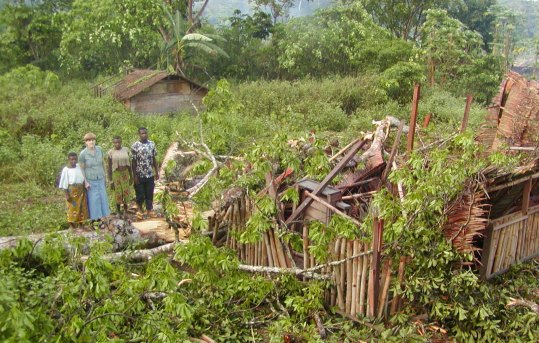
In the forest, approaching thunderstorms create high winds.  The dead branches that fall during the storm make you feel like someone is throwing things at you.  When selecting a camp site in the forest, the Bayaka people always look to make sure there are no “widow makers” above the site.  The picture below shows the aftermath of a tree that fell on a church just as Diane was pulled out the door by her friend.

Tree 6 c 10-04.jpg


At our house we removed the only tree that would cause damage if it fell on the house.  From our breakfast nook I look across top of an oak tree because it grows from lower ground. I didn’t like the way it blocked part of the scenic view of a nearby hill.  It will only get worse.  I have relatives with a vacation home on a lake in Willow, AK.  As the spruce trees across the lake grew, they lost their view of Denali (formerly Mt McKinley).

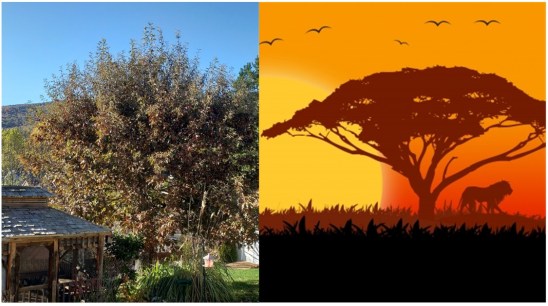
At one time the top our oak tree was cut off to open up the view of the hill.  It is 18 inches thick at the base and was cut off at 22 feet high.  Since then lots of branches grew up.  I didn’t like the looks of the crown.  In my mind I could imagine the umbrella shaped crown of an Acacia Tree in that spot.

US Tree next to African Tree.jpg

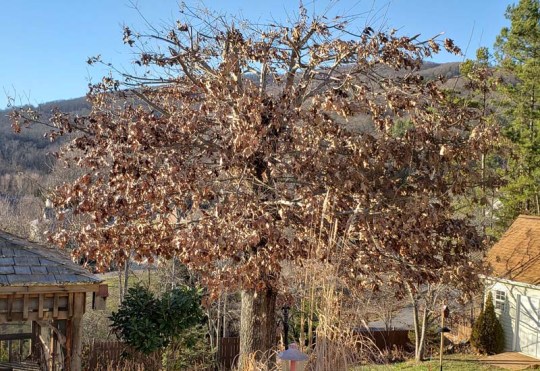
I bought a 22 foot ladder and the first winter we were in the house I cut down the long vertical branches coming out of the top of the tree.  Last fall I lugged a pole pruner up the ladder and shaped the crown.  That was a job that I managed to accomplish, but the day is soon coming when I will not be able to do that kind of task.  One advantage is that the horizontal branches that grew out of the trunk since the tree was topped gave me security while I was on the ladder.  Take a look at the after photo.  I am pleased at how it came out.

20191230_160955 cr.jpg

Pets

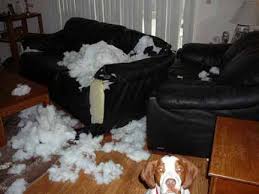
The chairman of the board wants a dog.  I am stalling on this one.  It is true that a dog would be a nice companion for her while I am working in South Asia, but all I can think of is the downside. That is the angle that I am working on.  I casually pass on the horror stories like the one about a dog named Jeep that we had when I was growing up. He once felt confined, so he tore through a wall to get into the next room.

dog damage 2.jpg

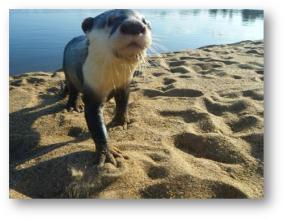
We had some pretty cool pets when we were in the Congo.  Buying live animals from the local hunters was not a good idea, but the 3rd time the local seller brought a baby otter by our house, it was in bad shape. After he recovered, Ollie was the coolest pet romping along with Hap & Josie like a dog.  I used to net fish for him.  We didn’t know that otter mothers teach their babies to go under water.  When we took this one on a swim trip to the sandbar we thought he could swim.  It got water in its lungs and died.

image001.jpg

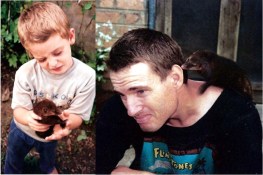
Meercats are very photogenic and the stars of a TV show.  In the Congo Basin Rain forest there are mongoose species like them that run in packs and have a well developed social life.  We had a couple that were the best possible pets.  They fended for themselves outside.  You could imitate their trilling call and they would come to you when you wanted to interact with them.  Unfortunately, like all our pets in Congo, they met a tragic end.  Life is tough there for man and beast.

Mongooses 11-19.jpg

I decided that the best pet is one that takes care of itself outside, comes to you when you want it to, and leaves when “pet fun time” is over.  In Congo we had a porcupine that we fed outside, but it ran away.  I didn’t lose any sleep over it.  If he was too stupid to see what a sweet gig he had, that was his problem.

We found the ideal virtual pet when Rich and Jenny let us stay in their guest house.  Their dachshund named Cheda had to be around people.  When Rich and Jenny went out, Cheda would come and stay with us.  She had a sixth sense about when they might return and would leave us at that moment.  I might spend the rest of my life trying to reproduce that way of having a dog that came with zero responsibilities.  Our biggest problem is the challenge of taking care of a pet when we travel internationally.

15721461836611820566332722283204.jpg

Two months ago when I was surfing the internet in South Asia, I may have found the answer.  The Sony Aibo is billed as “A pet that behaves like a puppy using artificial intelligence (AI) to learn and interact with its owner and surroundings.”  The first version had some drawbacks, but the latest version is better and a steal for only $1,750.  You can imagine the joy in the heart of the chairman of the board when I showed her the picture of this cuddly creature.


Terraces

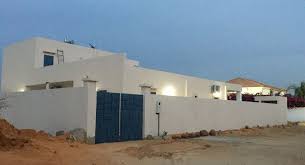
Most house where I have lived in Africa and now South Asia, have a wall around them.  I am glad this is not necessary in most places in the US.  You can make the area inside of the wall look like a garden paradise, but your gaze has to stop at the wall.  The view is limited.

House with wall around it

I have always liked to look far off and imagine seeing Jesus returning on the clouds (Mat 26:64).  The chairman of the board & I are thankful that our base in the US has that kind of view out the sun-room window.  On the other hand, to have a view like that you have to be on the top of a hill.  This adds challenges to mowing the lawn and gardening.  We are not preppers, but is has crossed our minds that it would be nice to be ready if civilization as we know ever collapses.  There was a small garden in the back yard when we bought the house, but it didn’t look to me like they used the terrain right.

Banaue Terraces

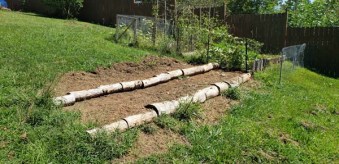
I got inspiration from the Banaue Rice Terraces in Banaue, Philippines.  They were carved into mountains of Ifugao about 2,000 years ago by the ancestors of the present-day inhabitants.   The terraces are considered the 8th wonder of the world.  Before I went to South Asia in March I was inspired to create our own type of terraces.  Some day they will be a tourist attraction like the ones in the Philippines.  I didn’t have time for any earth carving.  The property came with a stack of firewood.  Instead of dug in terraces, I followed the build up concept, by laying down the rows of firewood and filling the gap with soil produced by yard work and compost.

20190829_145212 r

While I was away in the spring, the chairman of the board planted our first garden.  A neighbor helped her put in a rabbit proof fence.  We hardly bought any vegetables over the summer. It was a huge success.  There was a little mix-up, however.  The kind of thing that happens when the person who does the design is not the person doing the implementation.

The chairman of the board went to a raised bed gardening seminar and touted all the advantages of this technique.  My thoughts went to a recent trip to WI.  We passed through Illinois on the way home and I saw right away that the farmers of Illinois did not take advantage of all the benefits of raised beds to grow their corn crop.

In my mind I was thinking “no” to the raised bed proposal, but I have learned over the years that the right answer is always “yes”.  I tried to bluster my way through the issue by explaining how standing with your toes against the firewood terrace wall and working uphill was just like working in a raised bed.  This year the garden did not get laid out that way, but next year in between travel for our 3 projects in the US and South Asia we will try to get it right.

Lawn Ornaments

I have always liked lawn ornaments.  There is nothing more beautiful than the original Don Featherstone pink plastic flamingo.  30 years ago, I bought my mom a pelican lawn ornament.  They say that you buy gifts you would like to have yourself.

My friend Karl in AK has the best lawn ornaments of anyone I know. There aren’t too many lawns up there, so I guess they are called yard ornaments.  You know you are going first class if you need a crane for the job.  The best kind of lawn ornaments are found washed up on the beach, half buried in the outback, in a pile of industrial waste or are repurposed from a former life as a consumer item.  Someday I will learn to weld so I can make those statues that look like a helicopter crash.  In Senegal I saved all the metal I pulled out of flat tires with plans to make a statue out of it.  Sadly, the collection did not make it to this side of the ocean.

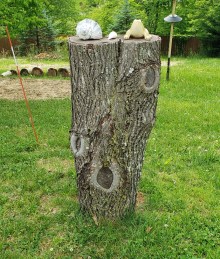
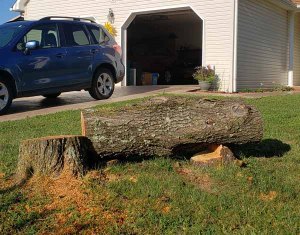
Before I left for South Asia Sept 1 My friends helped me drop a Bradford Pear tree in our front yard.  That event will one day make it to Adventures in Suburbia.  The trunk is over 14 inches in diameter.  When it was lying on the ground, I had a brilliant idea.  I left about 5 feet of the trunk intact lying in the front yard in order to make a lawn ornament out of it.  It is so heavy I couldn’t stand it in end, so I left it to dry.

20190901_085432 cr

I never got excited about chainsaw sculptors.  I once read “The Agony and the Ecstasy: a biographical novel of Michelangelo.”  I decided that a real artist carves marble with a hammer and chisel.   I don’t have any marble, but I can imagine that I am Michael Angelo when I start work on the sculpture.  Maybe we could have each visitor to our Congo Museum (Grand Opening May 2024) carve their name on it.   It has some cool knothole features that can be exploited artistically.

My problem is that the chairman of the board does not share my love for lawn ornaments. I will write about homeowner’s associations another time, but that is not an issue for us. The chairman’s concern is, “What will the neighbors think?” Our across the street neighbor has a plastic flamingo in his yard so I think that answers that question.  My plan is to move forward at a glacial speed so that whatever I do will look like it has always been there.  I don’t think we will try to carve the likeness of anything, just cut enough to accent the knot holes. Even if I don’t do much carving, the log standing on end will make a great place to put a pelican lawn ornament.