Feeding the Crew

I am working on an outdoor kitchen where I can prepare small boney fish, invasive carp, groundhog and roadkill the way we did it in the Congo.  You could call it smoking the fish or meat over an open fire, but it is more like drying it to preserve it. Sunfish bones become so brittle that you can eat them like potato chips. I was a happy man when after a test run, one grandson said that the fish eyes were the best part.
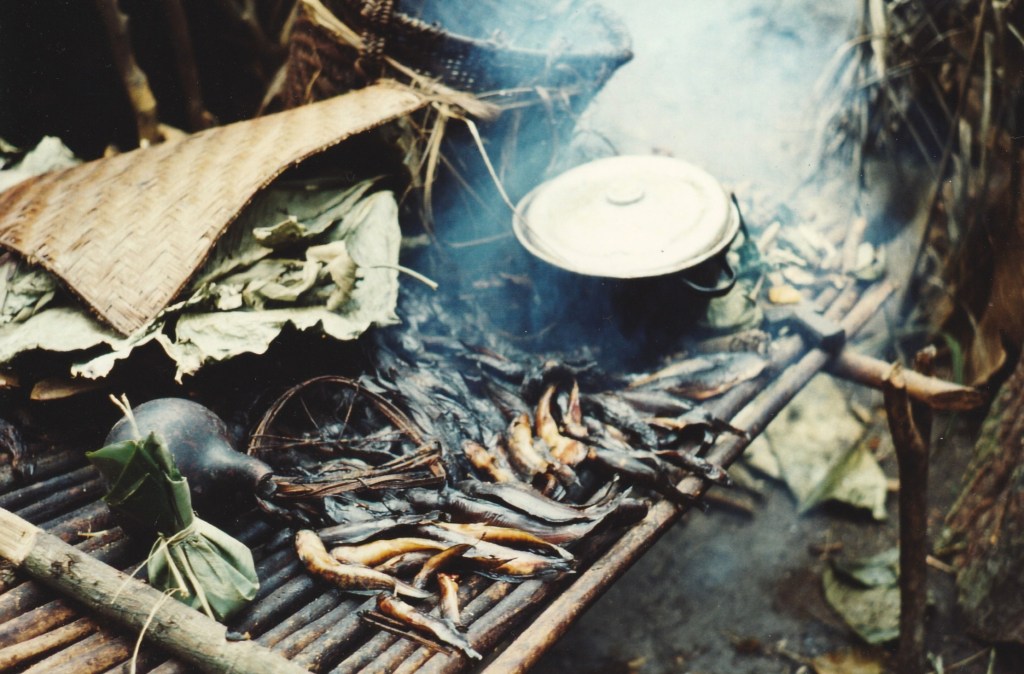
Small catfish drying over a fire.

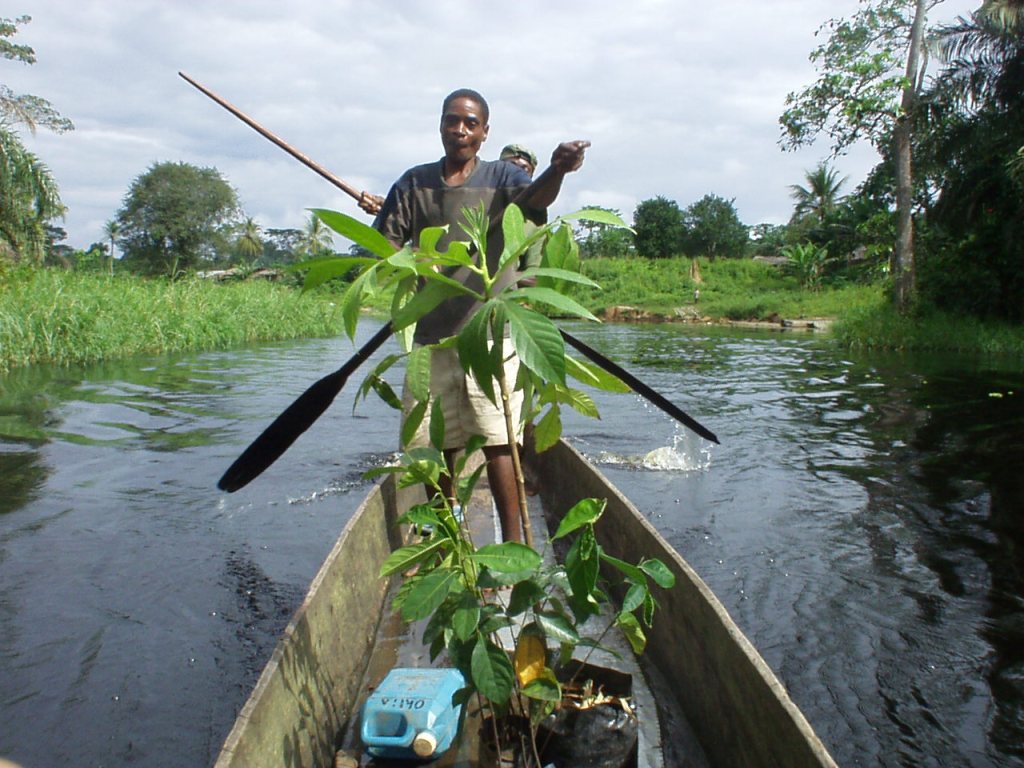
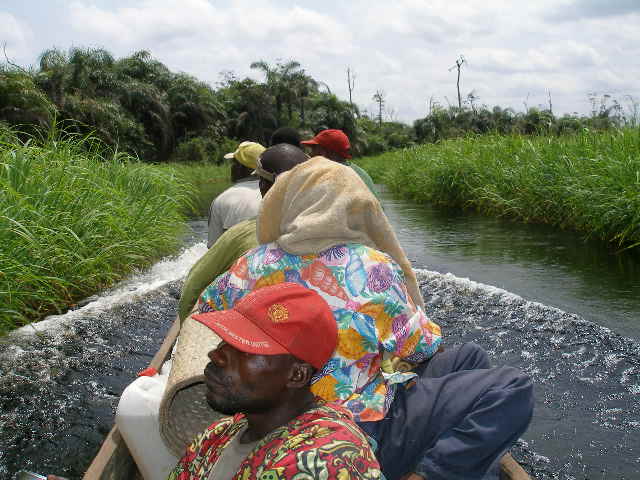
Through the effort I am reliving the days when we ran the rivers of the Congo Basin rainforest with a small team.  The day before departure, I would get someone to cook a big pot of “pondu” (dried fish, pounded manioc leaves and unrefined palm oil eaten with manioc loaves). During the first day of travel, the pot sat unrefrigerated at the bottom of the dugout canoe. That evening, we would thoroughly boil away any microbes and dig in.  It was delicious.  On the evening of the second day, after again sterilizing it on the campfire again, it was ok. On the third evening, following the same process, it was sour but edible. At that point, I gave away whatever was left in the big pot. 
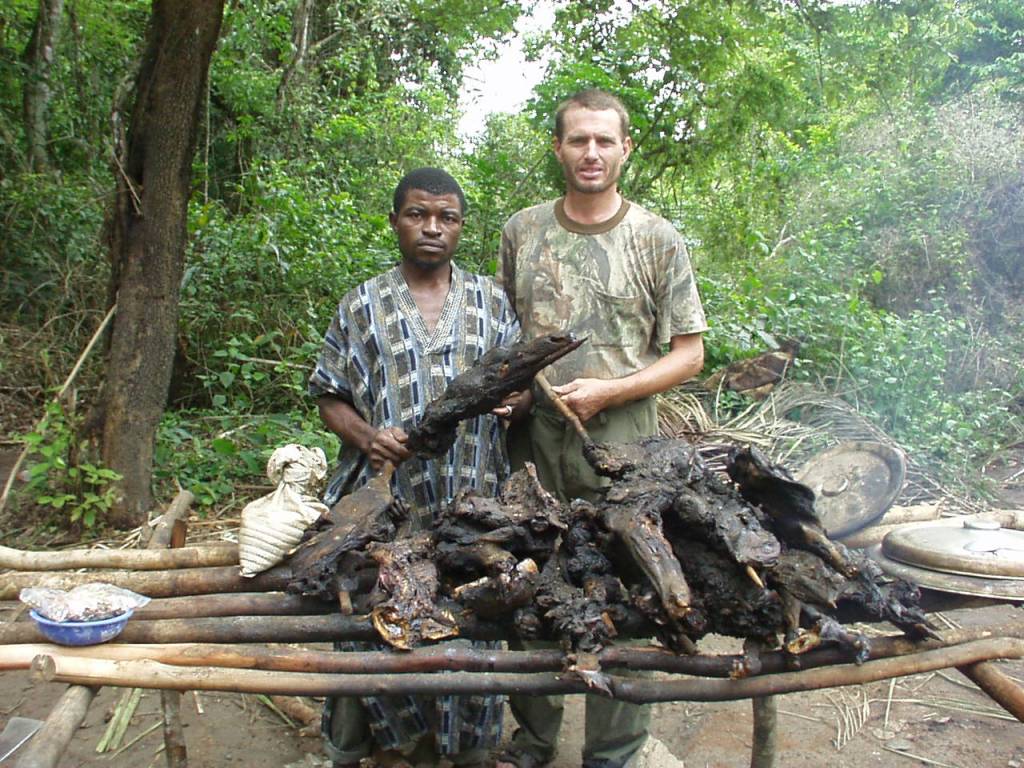
Bush meat dried over a fire.

On one trip through the forest with Hap we purchased a small antelope from a hunter. We never had coolers or ice.  What we couldn’t eat we dried on a fire, but since we were traveling around, we did not have the time to thoroughly dry the meat over the fire.  Parts of it were ok, but other parts questionable. After cooking it you forked the chunks of meat in the pot, looking for the hard ones because the soft ones were rotten.
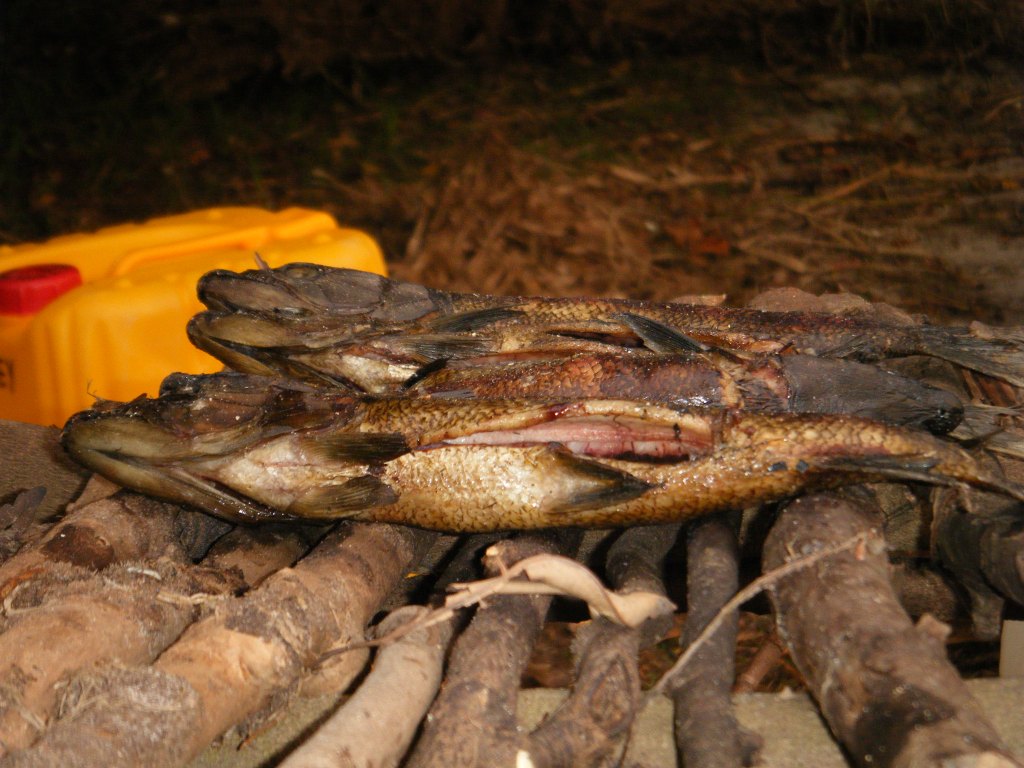
Mwenge drying over a fire.

When we lived in the Congo, every dry season we used to go up the Likouala aux Herbes River from Epena, camp on a sand bar and fish for a few days.  The first time it was just our family.  Naturally, while catching mwenge (african pike), ngolo (catfish) and mongusu (snakeheads) we got competitive.  One day, Josie caught a big mongusu which we dried over the fire with the rest of the catch.  The next day I caught a big one which I declared to be larger than Josie’s.  Hers had already shrunk after being dried on the fire, so we argued about whose was the biggest for the rest of the trip. 

There are 2 stories about feeding my crew in Central Africa that most people would find revolting. I took them out of this blog post.   There are some things that those who did not live in the Congo Basin Rainforest can’t understand.  It all seemed to have happened in a different lifetime.  Life is pretty tame here in TN, but I still have 1 groundhog in the freezer. The grandkids have been asking when we will cook it up in the outdoor kitchen.
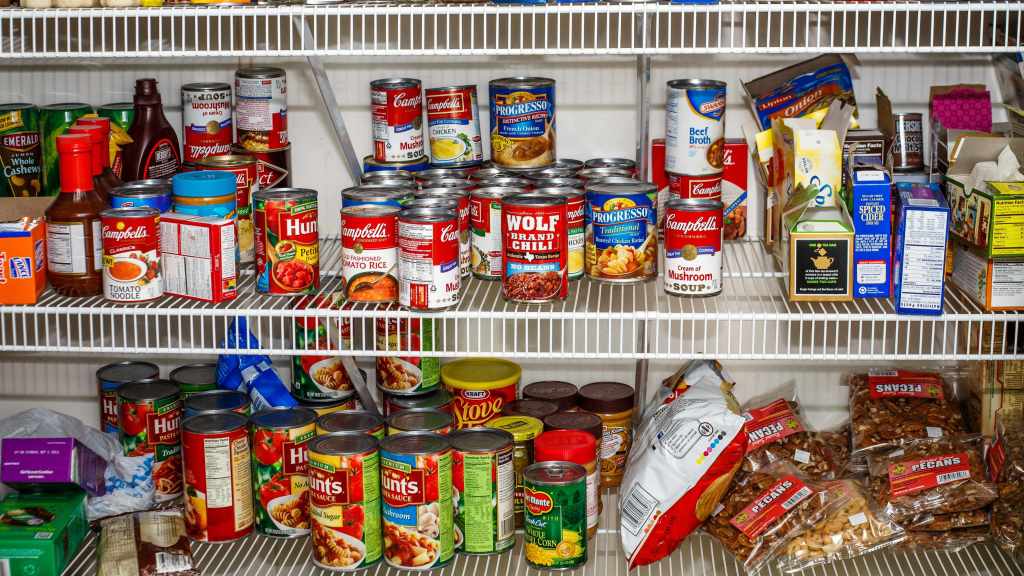
Two Kinds of Food

I was looking for a can of pink salmon in the cupboard.  It took a few minutes of moving unwanted items out of the way before I came to the can of salmon I was looking for.  A light bulb went on in my head.  There are 2 kinds of food in my cupboard and maybe in yours.  The “Food You Eat” and the “Food You Don’t Eat”. 

Our cupboard is full to overflowing, but few of the items fit into the “Food You Eat” category.  For me, this would be sardines, salsa, pickles, coffee and canned salmon.  The majority of the items that fill up our cupboard fit into the “Food You Don’t Eat” category.  Examples of this are tomato soup, artichoke hearts, sauerkraut, cream of mushroom soup and seaweed snack.  When I track down the history of how items like this got into our cupboard I find that at one time there was a need for them, but the need disappeared and the items remained. Other items came as gifts of items we didn’t need, but did refuse.

The same principle applies to the salad dressing shelf in the refrigerator.  I don’t use salad dressing.  By putting pickles in my salad I am getting cucumbers and salad dressing all in one (also a lot of salt).  So why are there nine different kinds of salad dressing in our refrigerator?  This is a battle I have chosen to not fight.  At least we will impress any guest with our array of salad condiments.

My guess is that the reality of cupboards being filled with 2 kinds of food runs across the country and cuts across the socio-economic spectrum.  Let me know if it rings true at your house.  One disclaimer:  The chairman of the board has not given her approval of this article. 

Are you wondering what to do with “Food You Don’t Eat”?  Occasionally I think about what life will be like when civilization as we know it collapses.  We expect to get by the first couple of months on the “Food You Don’t Eat.”  By that time artichoke hearts in tomato soup will look pretty good.  After that we will break out the salad dressing.

Traveling While in Pain

While waiting in Bogota for my flight to Dallas, my left knee swelled up and gave me intense pain. This happens to one or the other knee every couple of months (No, I haven’t had anyone look at it.) As you can imagine, hobbling through the Bogota airport was an ordeal. By God’s grace, the pain went away during the 5 hour flight. I slept well.

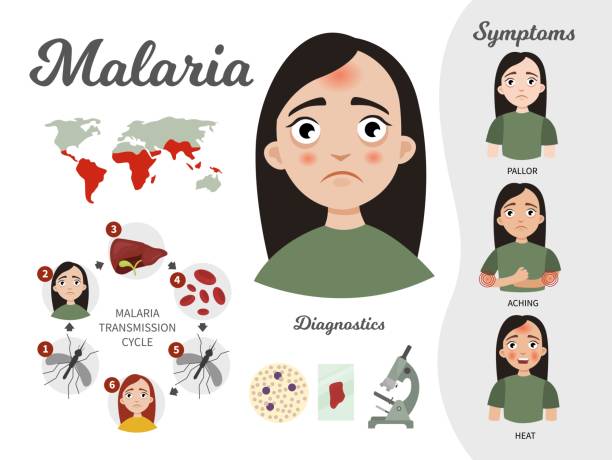
It made me think about the times I traveled through Congo Basin Rain Forest with a case of Malaria.  For me the symptoms were chills, temperature spikes and total fatigue. 24 hours of bed rest took care of it, but it was not possible when on the road.  

Once I traveled with Hap for 4 weeks from Yaounde, Cameroon, through CAR to the Congo.  On the way back I had to drive with a case of malaria from Nola to Berberati.  It was an ordeal, but there was a silver lining.  In that area there are many hassles at the multitude of police check points. That time, immediately after I told the police officers that I had a case of Malaria, they waved me through. 

As we entered the church compound where we would stay at Berberati, we got a flat tire.  To help me in my weakened state the pastor had his son change the tire. The next day on the way to Gambola, all 5 lug nuts came off along with the tire and wheel.  Still suffering from malaria, I had to jack the Hilux off the ground to get the wheel back on.  We found all the lug nuts. In my experience, they all fall off at the same time.

When in pain we tend to cancel social engagements and stay home. Once in India I did the opposite. Mohammed invited me to the wedding of his son. The evening I was supposed to go to his house, I had severe knee pain. I wanted to go to the wedding and it came to mind that suffering in my apartment would be worse than suffering at the wedding where there were so many distractions. I attended the wedding and my assumption was 100% correct.  I had a great time and forgot about my knee pain.

Carter County Hwy Dept

I worked in agroforestry in Central & West Africa because it provided long-term food production solutions.  In the picture below you will see how we got breadfruit and jackfruit trees to Mimpoutou, Republic of Congo in 2004.  I haven’t been back since, but I sure hope those trees are now producing fruit.

Agroforestry has great value, but it comes with many hazards for the young fruit trees (and old fruit trees).  In Wongo, CAR we planted a breadfruit tree, but kids fooling around with a machete ended its life.  Slash and burn agriculture brings the danger of fire to our orchards.  We lost a few fruit trees at the Dongou Training Center when the owner of the neighboring lot set a fire.  This is the same place where a village pastor sent a bulldozer to flatten our oil palm orchard (It is a long story).  I once ran to our orchard in Ngenze, CAR after I saw a fire approaching.  The local Bayaka residents calmed me down and showed me the fire break they made.  I was impressed by their foresight.

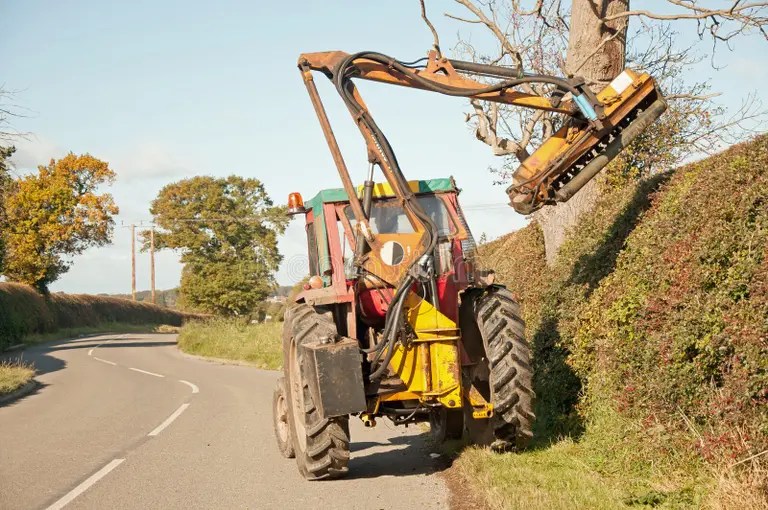
Now in suburbia I have encountered another hazard to trees.  We bought a vacant lot below our house.  On the road frontage along Sherry Lane I planted 14 Norway Spruce and Leyland Cypress.  I figured that alternating the tree species would look good.  Each year the Carter County Hwy Dept mows 8 feet along the edge of the road.  I planted the trees 11 feet from the road.  This year the irresponsible cowboy at the controls of the mower mowed 20 feet cutting down my trees.  I arrived just after the devastation.  There was a chance to yell and scream, but after a brief and unsatisfying conversation I calmed down and walked away.  One more way to lose trees.

Ma’s Hammer

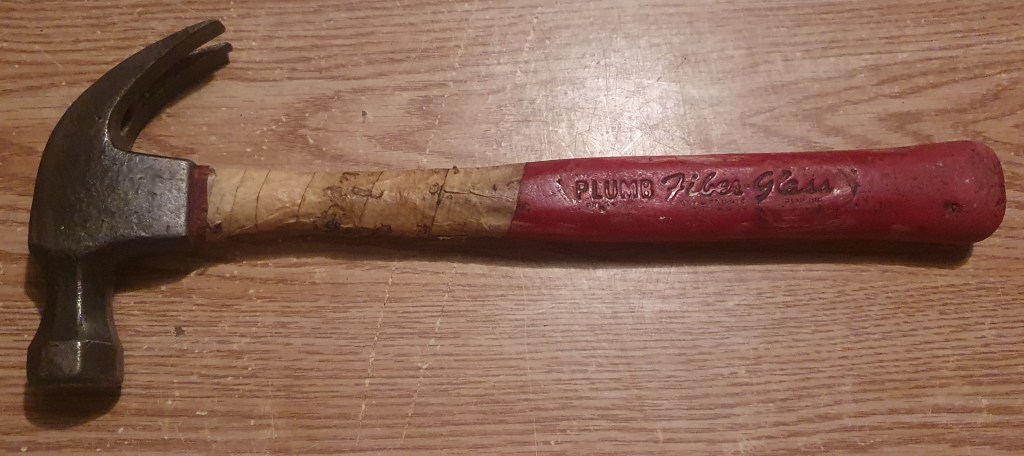
A little over a year ago I was in my mother’s basement.  I opened a drawer in a worktable and saw the fiberglass handled hammer that was kept in the junk drawer of the kitchen in the days of my youth.  She wasn’t called “Handy Elaine” for nothing. 

The hammer brought back a lot of memories.  It was the “go to” tool for many kinds of tasks.  My brothers & I used it as an axe.  Behind our house (I never knew who owned the property) was a small forest ideal for building tree houses.  With the claw of the hammer we chopped down small trees that we called choke cherry trees.  The trees became the beams to support the tree house.  We nailed them in place as high as we could up in larger trees. 

My dad was a builder.  We found a lot of “cut nails” in the nail bin in the garage.  They worked fine for tree house construction.  After the triangle shaped frame was attached to 3 well placed trees, we chopped down more choke cherry trees and made cross members to put on the frame.  Building this kind of primitive tree house was an end in itself.  I don’t remember using them much after the build, but as I recall my sister fell out of one and broke her arm.  When we got older, we learned to salvage scrap wood from construction waste dumps and recycle what high water left on the banks of the Merrimack River.  This we used to build bridges over the creek behind the house.

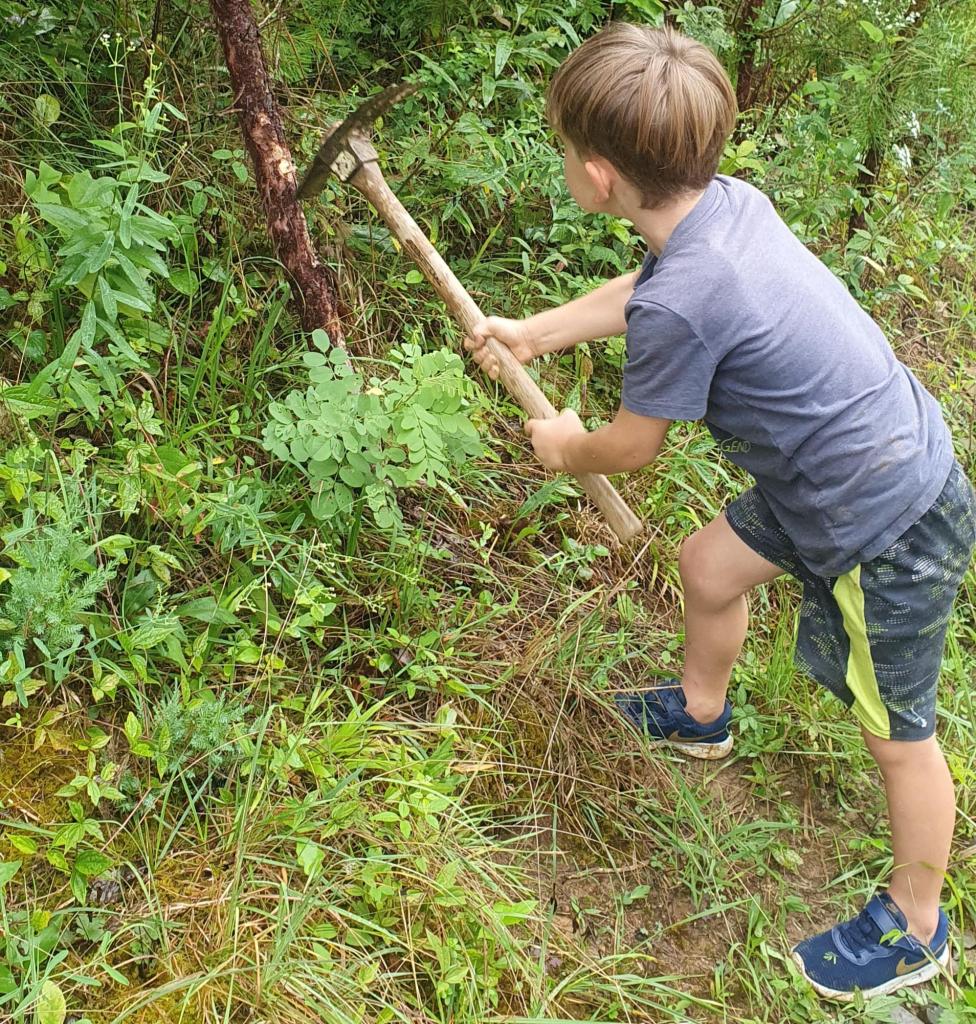
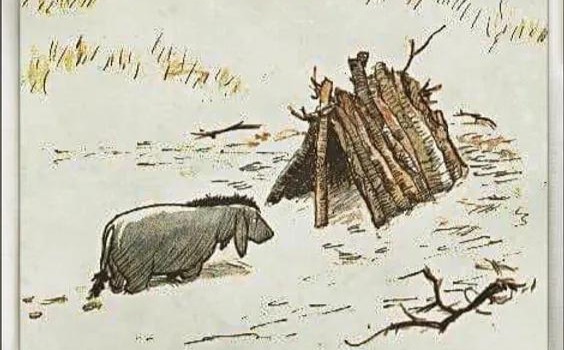
Alas, kids aren’t allowed to roam any more.  Things have gone full circle, but with my grandson there is more supervision than we had.  I don’t trust him with anything sharp, but was able to get him a better tree cutting tool than we had.  We are building Eeyore’s house on the ground.

GROUNDHOG

We have a ground hog in our freezer.  I processed it the way we did it in the Congo.  When you burn the hair off it instead of skinning it, you can eat the skin, a valuable protein source.  Despite my meticulous care and washing of the carcass, the chairman of the board says it is giving a burnt smell to everything in the freezer. 

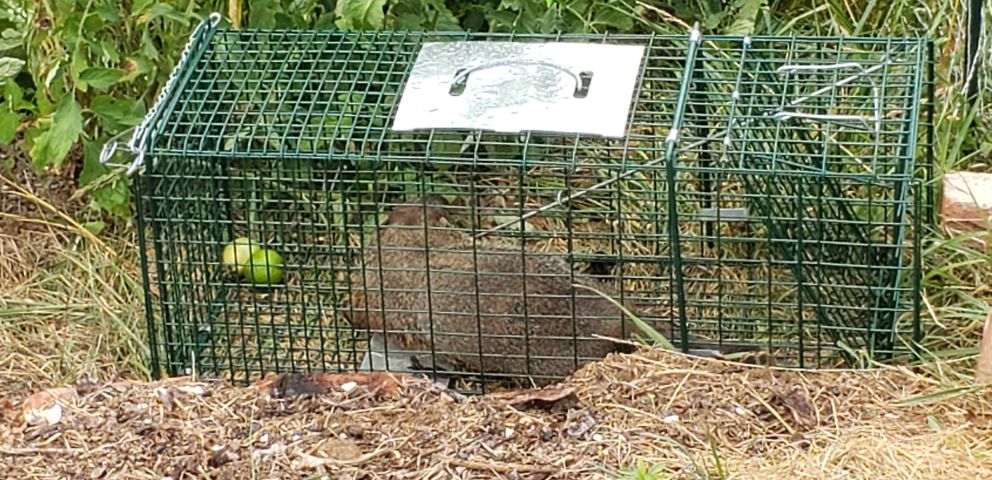
I use the word groundhog instead of woodchuck because I want to talk the way locals here in TN talk.  Up through 2023 we averaged 1 a year in the garden, but this year we had 4.  We caught 2 in a live trap (the other 2 were dealt with in a different way).  The Havahart live trap people suggest releasing what you catch at least 5 miles away (that is, release it into someone else’s garden at least 5 miles away).     

Many consider groundhog not fit to eat.  Out of the 4 I dispatched this year, I processed 2 for the freezer.  One delighted the palates of me and 2 grandchildren.  I saved a chunk for the chairman of the board, but threw it away after it sat a while in the refrigerator untouched.

I learned to eat this taste treat when living in the Congo.  Our local version was called Sibilik, but elsewhere in Africa they are called, Cutting grass, Grass cutters or the Greater Cane rat. They are raised for meat in some places.  I recommend that the trade association ditch the name “Cane Rat” in order to increase sales.  If you think about it, the North American version and the African version should be considered table fare because they only eat grasses and other vegetation.  It is a delicacy in West Africa and often sells for more than chicken or beef.  I don’t know why so many in the US do not consider them fit for the table.

We have one left in our freezer.  The chairman of the board is lobbying for its removal.  I say, “Let’s keep it in case of hard times.”  I did make a big concession.  I am building an outdoor wood fired cooking area and that is where we transformed the first ground hog into a culinary delight.  I want to be prepared for when civilization as we know it collapses.  I am building a place outside the house to cook roadkill and invasive Asian Carp.  In the area of the Congo where we lived, fish and game is always cooked outside the house.

F-orth Mayor

Passing through DFW airport, I heard the greeting to the travelers by the Fort Worth, TX mayor on the PA system. I heard, ” Hi I’m Mattie Parker the F-orth mayor.” This brought to mind the rural administration titles I dealt with in Central & West Africa.

Going up the Ibenga River from Enyelle, I once saw a sign marking the narrow forest waterway to “Paris, Congo.” It was late afternoon so we pulled in and spent the night on this this tiny piece of dry ground sticking out of the swamp with 3 huts on it.  The titles of officials representing the rural municipalities where I worked in the Central African Republic (CAR)had similar delusions of grandeur. The division of jurisdiction followed the French system. Here is Wikipedia on Paris administrative districts, “The twenty arrondissements (French: ‘rounding’) are arranged in the form of a clockwise spiral, often likened to a snail shell, starting from the middle of the city, with the first on the Right Bank (north bank) of the Seine.”

These CAR villages did not spiral around a center. They were situated in a straight line along a dirt road no deeper than a mud hut on either side of the road. When passing through. It did not look like a village at all.  They went on for miles. When working at a random spot in such an area inevitably, someone would pop up and say, “I am the mayor. How dare you stop here without contacting me.” The next week someone else would pop up in a spot down the road and say that he was the mayor.  It was confusing until I learned that like the numbered “arrondissements” of Paris they had the 1st mayor, the second mayor, third mayor etc. When the mayor of Fort Worth, TX said she was the F orth Mayor, that is what I thought of. 

It was different in the Congo and in Senegal. The head of a village in the Republic of Congo was elected and had the title of PRECO: “president committee villagois.” I am not sure about rural Senegal, but in the city we lived in, each neighborhood had a “delegue du quartier.”  In all three countries, the man in charge would be the only one with his country’s flag flying in front of his house. Down the street from our house in Thies, Senegal, a homeowner let the bougainvillea grow up his front wall an onto the electric line. It was so thick, I thought it would bring down the line and we would lose power. I mentioned this to the delegue du quartier and someone cleared the line the next day

I don’t want to give the idea disputes with neighbors always get resolved so quickly. In the Congo, I was in many seemingly endless land disputes. Swa, a man living next to one of our church properties put up his own boundary and after that we could not find the original cornerstone boundary marker from the 1960’s. This gave him 15 meters of our property.

We called in the government agency that surveyed and registered the deeds. They showed us where to put the cornerstone. This was a public spectacle. The youth group from church attacked Swa’s improvised boundary marker. Swa attacked us all with a machete. He backed down, but his improvised boundary marker had such a massive subterranean concrete anchor that we could not destroy it with the tools we had with us.

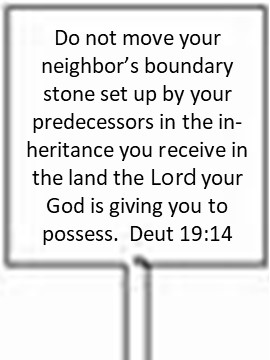
Days after the incident, someone removed the new legit boundary marker and the case is still pending 25 years later. I never felt like the church executive committee was aggressive enough on the case. I made a sign like the one pictured above and wanted to plant it at the site in view of the whole world.  The sign is probably still in the church office. They would not agree to post it.

Jesus is Coming

This is an update of “Slash & Burn Lawn” 8/27/2020.   There should be a disclaimer in this post, “Don’t ever take lawn care advice from this man.”  In the Central African Republic, RD showed me a type of Bermuda grass that grows to a short height so it does not need to be cut.  This forever changed my view on lawncare.  Something like this must be available in the US.  I bet that some company developed seeds for this kind of grass, but “Big Lawn Care” bought the patents and hides the product in order to sell lawn mowers. 

Two weeks ago, I saw a man pulling a roller around his lawn with a lawn tractor.  I imagine that the procedure will make his grass grow better.  You won’t see it happen at my house.  My goal now is to mow every 3 weeks.  I want the grass to grow slower not faster.  I can’t imagine why anyone would put fertilizer on their grass.  I would buy a product that was sold as the opposite of fertilizer. 

Perspective is interesting.  I work in a prison ministry with a lawn care professional.  In June when we had no rain, lawns did not grow.  It was his down time, but for me  a time of joy.  We went on a 2 week trip and did not need to mow our lawn when we returned.

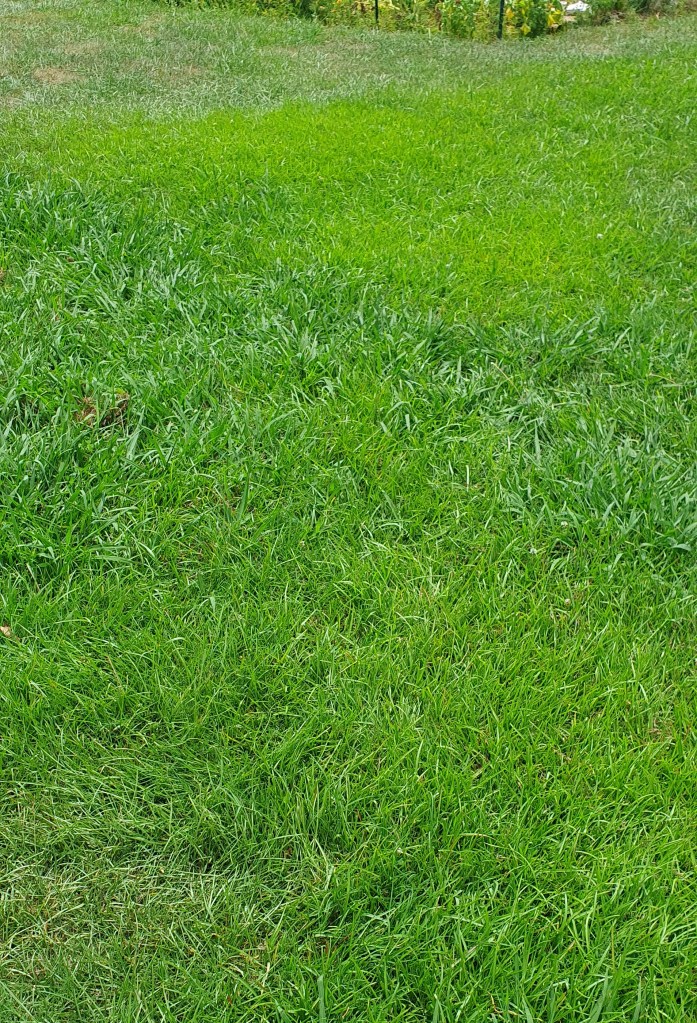
In the post “Slash & Burn Lawn” 8/27/2020, I mentioned my battle with crab grass.  I wouldn’t mind it if it didn’t grow so fast.  I planted Centipede grass to over come the Bermuda grass.  RT has a fine Centipede grass lawn in Charlotte, NC.  I showed him how I was planting patches of centipede grass and counting on them coming together and overwhelming the crab grass.  He told me that the isolated patches would not join together before Jesus returned.  Look at the picture.  The small pockets of taller grass in the middle are crab grass.  See how the pockets of centipede grass are joining together.  It won’t be long now.  Rev 22: 20-He who testifies to these things says, “Yes I am coming soon.” Amen Come Lord Jesus.

The Acacia Project

This is an update of the Feb 2, 2020 post called “High Altitude Pruning”. You can see it at: https://wordpress.com/post/ohlinupdate.net/213

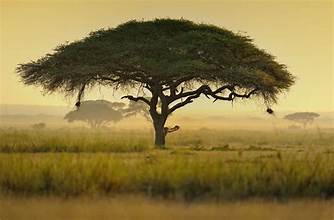
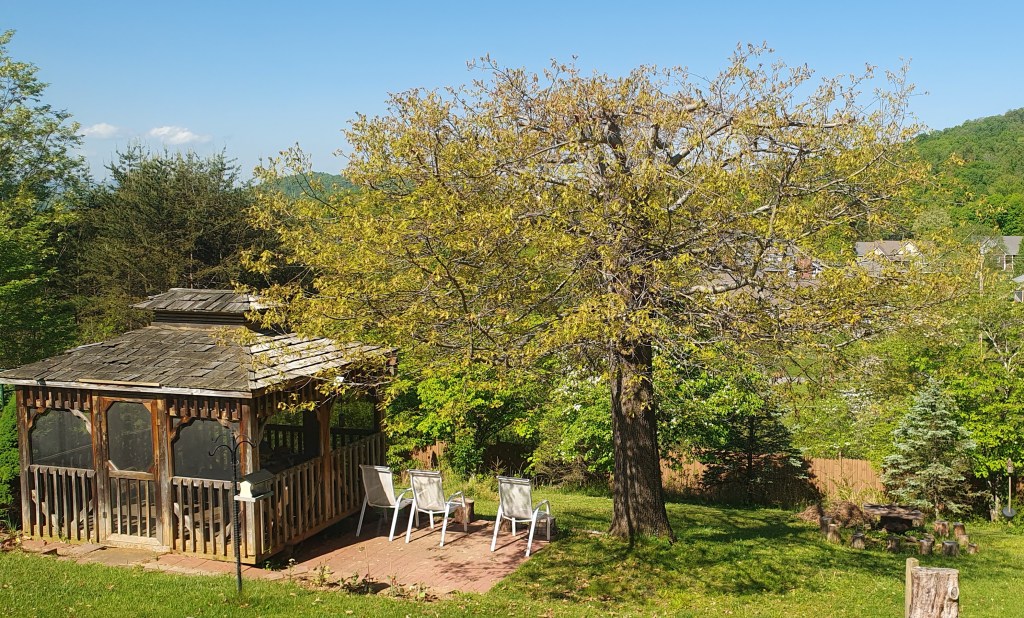
I was in Senegal last year, but it does not look like I will be in Africa this year.  To bring Africa to us, every year I prune the crown of the oak tree in our back yard.  I am trying to get it to look like the Acacia Tree pictured below.

The oak tree is not cooperating.  Instead of majestic horizontal spans, it wants to grow up.  We need some giraffes to browse on the vertical shoots.  I worked on it this spring.  Here is a what it looked like when it first started putting out leaves.

Living on a Hill

Before we settled in TN I was a little nervous about living on a hill.  It was the fear of the unknown.  When the chairman of the board and I looked at houses, we put any with a sloped driveway at the bottom of the list.  Over time we started thinking a sloped driveway was ok as long as there is a flat place to park the car. 

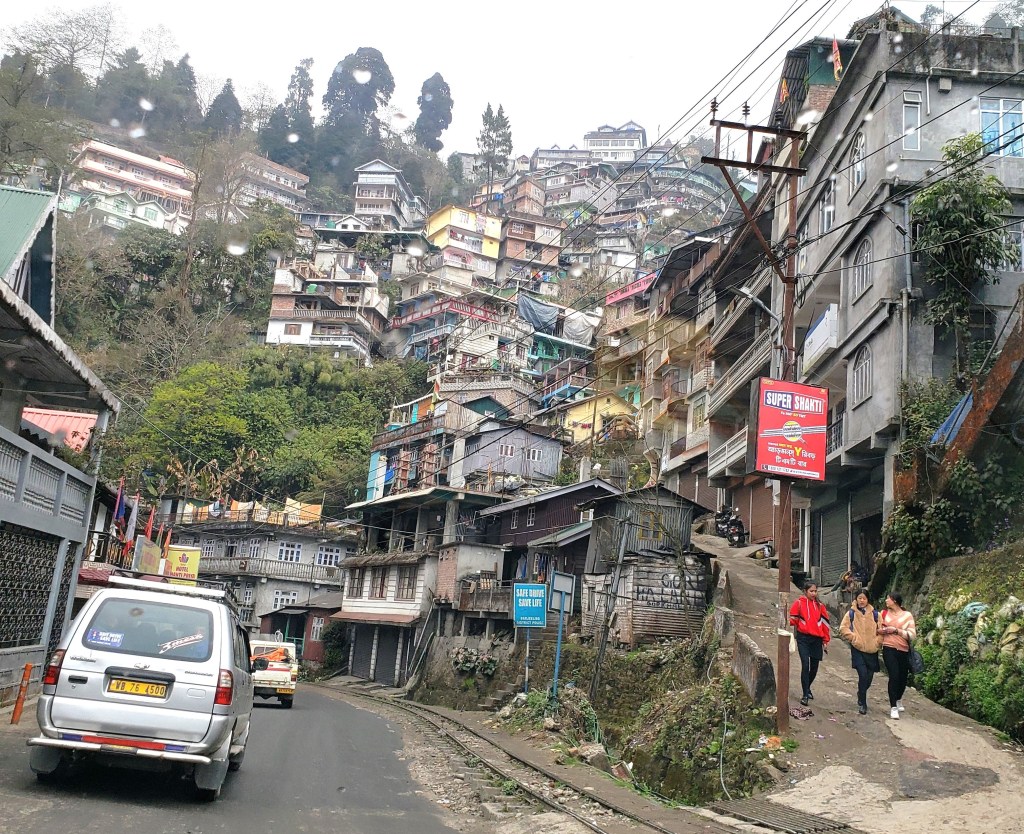
My outlook changed after we went on a trip to Darjeeling.  The people that live in the Himalayas know how to build houses on hillsides.  We saw places where the terrain was so steep that the entryway next to the main road was the 2nd or 3rd floor.  We ate at a Tibetan restaurant between Darjeeling and Kalimpong.  Entering it from the roadside 3rd floor front door, we walked around to the balcony where we had a beautiful view of the valley.  The access to the outhouse, however, was a steep goat trail from the road way down to ground level.  Neither of us descended to use the facilities.

Some of our initial concerns were snowy roads and mowing the lawn.   K & P live on a hill, so I learned from them.  They watch the weather and keep enough supplies in the house to last for the short period of time it takes the snow to melt after a storm.  Their beautiful landscaping does not include much grass.   

In the end, we bought a house on a hill.  The driveway is slightly inclined.  On some afternoons, across the hollow (pronounced holler) we hear the UPS truck “gun it” to get enough speed to reach the top of an unusually steep driveway to make a delivery.  By listening to the BBC in Africa for many years we learned that naming houses is an old British custom.  My proposal for our house is, “Buzzard’s Glide.” The chairman of the board has not yet voted in favor of the name.  Feel free to put pressure on her.  When buzzards glide up our valley, they are often at window level. 

Over time, we learned to live in a house on a hill.  The view is great.  We bought a rear wheel drive Husqvarna walk behind mower and love it.  It easily handles the hills.  Now I pity those that live on flat ground, and would not want to live anywhere but on a hill.